
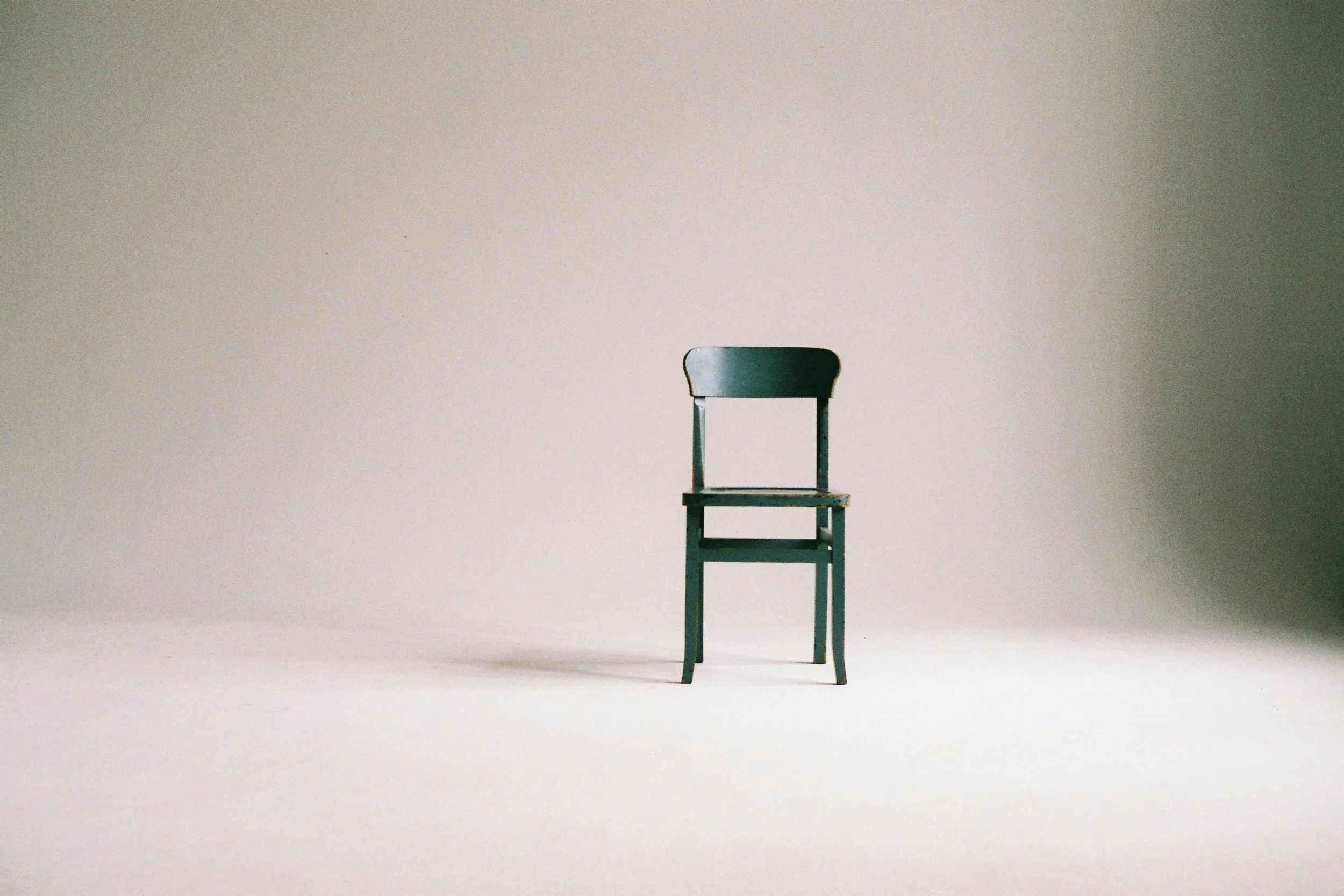
The Year of the Chair: From Throne to Throwdown
Take a moment and look at the chair you’re sitting in right now. Go ahead. I’ll wait.
Take a moment and look at the chair you’re sitting in right now. Go ahead. I’ll wait. This humble object—four legs, a seat, maybe a back if you’re lucky—has quietly shaped human civilization for over 5,000 years. It has held emperors, philosophers, CEOs, exhausted parents, bored teenagers, and probably you at 2:00 am Googling symptoms you definitely did not have.
The chair has seen things. And yet, despite its long and honorable career, the chair may also be one of the most dangerous inventions in modern history. Not because it’s malicious. But because it’s too good at its job.
A Brief and Slightly Ridiculous History of the Chair
The earliest chairs date back to ancient Egypt, around 2680 BCE. These were not your average kitchen chairs. They were symbols of power—ornate, elevated, and reserved for royalty and the elite. If you had a chair, you were somebody. Everyone else stood. The word “chair” itself became synonymous with authority. We still use phrases like:
Chairperson
Head of the Chair
Taking the Chair
The Chair of the Department
No one says, “I am the Stool of Accounting.”
Chairs mattered.
As centuries passed, chairs evolved from thrones to dining chairs, to office chairs, to recliners, to ergonomic chairs, to gaming chairs with built-in speakers and cup holders. Humanity went from sitting occasionally to sitting professionally. We optimized the chair. And then the chair optimized us. Into stillness.
When the Chair Became the Enemy
For most of human history, sitting was rare. Humans walked, squatted, knelt, climbed, carried, and moved constantly. Chairs were rest stops—not permanent residences.
Today, the average adult sits between 8–12 hours per day. We sit to work. We sit to drive. We sit to eat. We sit to relax. We sit to recover from all the sitting. Researchers have even coined a term: “Sitting Disease.” Prolonged sitting has been linked to:
Increased risk of heart disease
Reduced metabolic function
Weakened muscles
Poor posture
Chronic pain
Reduced circulation
Some public health researchers have gone so far as to compare prolonged sedentary living to the health risks of smoking—not because sitting is chemically toxic, but because of its widespread and cumulative effects on the body. The chair, once a symbol of power, quietly became a symbol of physical decline. Not intentionally. But consistently. The problem isn’t the chair. The problem is that we stopped standing up to it.
The Chair’s Redemption Arc
Here’s the twist in our story:
The chair is not inherently the villain. It’s misunderstood. Because the very object that has enabled our sedentary habits can also become one of the most powerful tools for restoring strength, mobility, and confidence. The chair can support us. Stabilize us. Challenge us. Strengthen us. It can help us move in ways that feel safe, accessible, and empowering.
In fact, using chairs intentionally for movement and exercise is one of the most recent and exciting chapters in the chair’s long history. The chair is no longer just a place to sit.
It is a place to rise.
5 Ways to Use a Chair to Increase Health and Wellness
1. Strength Training
Chairs provide stability, allowing you to safely strengthen muscles through:
Squats
Supported lunges
Seated leg lifts
Tricep dips
Core exercises
The chair makes strength accessible for all ages and fitness levels.
2. Improving Balance
Balance is not something we keep automatically—it’s something we maintain through practice. Using a chair or barre allows you to:
Practice standing on one leg safely
Improve ankle stability
Strengthen stabilizing muscles
Reduce fall risk
The chair becomes your safety net while your strength grows.
3. Enhancing Mobility and Joint Health
Gentle chair-based movements help lubricate joints, improve circulation, and restore range of motion. Movement becomes less intimidating when the chair is there to support you. Especially for those recovering from injury, managing joint pain, or rebuilding strength.
4. Supporting Nervous System Regulation
Chair-based yoga and breathwork can calm the nervous system, reduce stress, and help regulate emotional states. When the body feels supported, the nervous system feels safe.
And when the nervous system feels safe, healing becomes possible.
5. Unlocking Joy Through Chair Dancing
Perhaps the most unexpected gift of the chair is its ability to bring out playfulness. Chair dancing allows for:
Creative expression
Musical connection
Confidence building
Joyful movement
The chair becomes a dance partner instead of a restraint. It holds you while you discover your strength. It steadies you while you explore freedom.
Moderation: The Chair Is a Tool, Not a Destination
We love a good chair. Chairs help us rest, reflect, eat, create, and connect. But like anything powerful, the chair must be used in balance. Not as a permanent residence. But as a place to pause. Not as an escape from movement. But as a support for movement. The goal is not to eliminate chairs from our lives. The goal is to change our relationship with them. To transform the chair from something that weakens us into something that strengthens us. From something that holds us down into something that lifts us up.
The Year of the Chair
At Yo! Barre, we’re reclaiming the chair. Not as an instrument of stillness. But as an instrument of transformation. A place where strength begins. A place where balance returns. A place where dancers are rediscovered. A place where you remember that support and strength can exist together. Because sometimes, the thing we thought was holding us back……is actually the thing helping us rise.
Becoming Yourself at Any Age: The Art of Rewriting Your Story Without Erasing the Past
There’s a quiet myth many of us carry: that authenticity has an expiration date
There’s a quiet myth many of us carry: that authenticity has an expiration date. That if we didn’t become who we were meant to be by a certain age, the window closed and the rest of life is just an exercise in compromise.
But that myth doesn’t hold up under gentle scrutiny—or under lived experience.
Adelaide Ann Proctor offers a softer, more spacious truth: “No star is ever lost we once have seen, we always may be what we might have been.”
The dreams we once held are not dead simply because they’ve changed shape. They are not failures because they didn’t arrive on the timeline we imagined. They remain part of our inner constellation—still guiding, still illuminating, even if we no longer steer toward them in the same way.
When Goals Become Ghosts
For a long time, I wanted to write the great American fiction novel. That was the dream. The banner headline. And despite any other successes I experienced in life, there was a background ticker tape running quietly but persistently: failed writer, failed writer, failed writer.
Many of us know that ticker tape well. It hums beneath achievements, relationships, and responsibilities. It’s not loud—but it’s convincing.
What I didn’t realize at the time was that the dream itself hadn’t failed me. I had simply outgrown the version of myself who needed it to look a certain way.
The Role of Life’s Vicissitudes
Life, in all its unpredictability, has a way of redirecting us. Loss, responsibility, aging bodies, shifting values—these vicissitudes don’t just interrupt our goals; they refine them.
Adapting and adjusting our reach is not a betrayal of our younger self. It’s often an act of profound loyalty.
Through more compassionate practices of yoga and meditation, I began to notice something subtle but important: I no longer wanted to escape into other people’s stories. As I’ve gotten older, the desire to disappear into fiction has softened. In its place came a quieter, braver longing—to fully inhabit my own story. Maybe I won’t write the great American novel. But I may write meaningful blogs. Or thoughtful podcast scripts. Or a self-help book that reaches someone at the exact moment they need it. And that realization didn’t feel like settling. It felt like coming home.
Authenticity Is a Living Practice
Authenticity isn’t a static destination we either reach or miss. It’s a living practice—one that evolves as we do.
Yoga and meditation didn’t convince me to abandon ambition; they taught me how to listen more carefully. They helped me loosen my grip on rigid identities and open to a more compassionate definition of success—one that includes presence, honesty, and self-trust.
Toni Morrison captures this truth with stunning clarity:
“You are your best thing.”
Not your résumé. Not your unrealized dreams. Not the version of yourself you think you should have become by now.
You.
You Are Not Late to Your Life
Moving toward your authentic self at any age requires courage—not the flashy kind, but the steady courage to revise the narrative without shaming the earlier chapters.
You are allowed to want different things now.
You are allowed to redefine success.
You are allowed to let old dreams evolve rather than mourn them.
No star you once saw is lost. It may simply be guiding you by a different light.
And perhaps the most radical act of adulthood is this: choosing, again and again, to live inside your own story—fully, honestly, and without apology—exactly as you are, right now.

From Pause to Power: Moving Into Action
A New Year Invitation to Shift Inner Narratives & Release Procrastination
A New Year Invitation to Shift Inner Narratives & Release Procrastination
As the calendar turns and the days slowly lengthen after winter’s darkest moments, something in us stirs. A whisper of possibility. A willingness — even if small, fragile, or uncertain — to begin again.
But beginning can be hard.
So many of us meet our goals with good intentions…
…and then bump into a wall of hesitation.
Procrastination, perfectionism, overwhelm, fatigue, fear of being seen, fear of failing — these inner narratives run deep. Most of the time, they weren’t chosen. They were inherited, conditioned, or developed as protection.
Procrastination is rarely laziness. It is often a freeze response — a nervous-system message that says: “It doesn’t feel safe yet to move.” And so, we pause.
The truth is: pausing isn’t wrong. Pausing is wise. But staying frozen — that’s where suffering grows.
The invitation of this season is not force, pressure, or grinding resolutions. It is conscious transition — from pause to power.
The Somatic Path: Change Through Body & Breath
Cognitive pep-talks alone rarely change long-held patterns. The nervous system must feel the shift — not just mentally understand it. That’s where somatic movement and embodied practices become life changing. In yoga, Barre, and mat Pilates, we blend:
Presence — slowing down enough to hear the truth
Breathwork — regulating the nervous system so action feels safe
Mindful movement — carving new pathways of “I can” in the body
Choice — reminding ourselves that action doesn’t have to happen all at once, only one breath at a time
Together, these form a well-measured cocktail that helps us interrupt old loops and step forward differently. The body learns first. The mind follows.
When we stretch, shake, rise, balance, breathe — we practice becoming someone who moves — even imperfectly, even slowly. Each physical action becomes a rehearsed possibility: If I can hold Warrior II, I can email that client. If I can face Chair Pose, I can open that new chapter. If I can take one yoga breath, I can take one real-life step.
Releasing Perfectionism & Overwhelm
Perfectionism tells us: “You must be flawless or you shouldn’t begin.” Overwhelm whispers: “There’s too much. Why bother?”
Somatic work rewrites that narrative:
Yoga allows space for mindful pacing
Barre teaches strength through small, repeated actions
Pilates reconnects us to deep core support — literal and metaphorical
You discover that big change doesn’t require big effort. It requires consistent presence. A 30-second stretch is enough. A single exhale is enough. One step is enough.
Moving Through the Stages of Change
So many people live perpetually in pre-contemplation (not even thinking about change) or contemplation (thinking about it endlessly). Movement and breath help escort us into the next phase: Action.
Not because we force ourselves —but because we become the kind of person who moves.
When the body practices motion, life begins to mirror it.
As Light Returns — So Can You
This season symbolically guides us: As the sun returns, as days lengthen, as light expands — we are invited to expand with it. Not in resolution-pressure or shame-based motivation, but through gentle, honest, embodied recommitment. You do not have to leap. You only have to begin.
A Closing Invitation
What if this January wasn’t about discipline……but about devotion?
What if action could feel like:
a breath,
a stretch,
a hand on your heart,
a promise to yourself whispered quietly:
“I will take one step — and that is enough.”
Whether you join a weekly class, roll out your mat for five minutes at home, or simply place your feet firmly on the floor each morning and breathe: You are practicing action. You are rewriting the story. You are moving —from pause, into power.

Exoteric vs. Esoteric Yoga: Why the Physical Practice Is Only the Beginning
When most people think of yoga, they picture movement
When most people think of yoga, they picture movement—sun salutations, standing poses, balancing postures, that deep exhale as you fold forward. These are the exoteric, or outward-facing, aspects of yoga: the practices that are visible, physical, and accessible to anyone who steps onto a mat. They’re beautiful, beneficial, and essential. But they’re also just the beginning.
Beneath the surface of yoga’s physical expression lies something deeper, quieter, and infinitely more transformative. These are the esoteric practices, the internal dimensions of yoga that invite us into stillness, self-inquiry, expanded awareness, and connection with the collective consciousness. While exoteric yoga strengthens the body, esoteric yoga strengthens our insight, our presence, and our capacity to live with intention.
Understanding the difference between the two can not only shift the way we practice but also ignite a desire to explore yoga more fully—whether through personal study or by enrolling in a yoga teacher training.
Exoteric Yoga: The Gateway In
Exoteric yoga includes the practices that are outward, visible, and commonly taught in studios:
Asana (physical postures)
Pranayama (basic breathwork)
Alignment principles
Sequencing and movement practices
These practices build strength, flexibility, mobility, and balance. They regulate the nervous system, improve overall health, and create a sense of grounding in the body.
But perhaps the most important benefit of exoteric practice is that it opens the door to something deeper.
Through asana, we learn presence.
Through breath, we learn steadiness.
Through steady discipline, we strengthen our ability to sit with ourselves.
Asana prepares us—physically, mentally, and energetically—for the more subtle layers of yoga.
Esoteric Yoga: The Advanced Practice Hidden in Plain Sight
Esoteric yoga is not about shapes or performance. It is the internal experience behind the shape:
Mindfulness and concentration (Dharana)
Meditation (Dhyana)
Self-inquiry and observation
Energetic awareness
Connection to intuition and higher consciousness
Experiencing unity with the collective consciousness
Yoga philosophy teaches that the real transformation occurs not on the mat, but in the mind.
The more esoteric practices connect us to a sense of expanded awareness—a feeling that we are part of something larger, woven into a collective intelligence that moves through all beings.
This is the territory where yoga shifts from being a fitness routine to a path of awakening.
This is where yoga becomes a lived experience rather than something we “do.”
Why Yoga Teacher Training Bridges Both Worlds
Yoga teacher training is often thought of as a way to teach yoga. And it is. But it is also so much more.
A well-rounded teacher training program offers both the exoteric and esoteric dimensions of yoga:
Deepened Personal Practice
Students gain a fuller understanding of why we practice—not just how.
Asana becomes more intentional, breath becomes more conscious, meditation becomes more accessible.
Access to Yoga’s Hidden Layers
You learn philosophy, energetics, subtle anatomy, meditation techniques, and the spiritual foundations that are rarely covered in regular classes.
Connection to Community
Teacher training cultivates a collective energy—like-minded people learning, questioning, healing, and exploring together.
Confidence and Empowerment
Understanding the inner and outer practices of yoga creates a profound sense of clarity, self-trust, and empowerment—whether or not you plan to teach.
The Joy of Sharing Yoga With All Bodies
Teacher training teaches you how to make yoga inclusive, accessible, and adaptable.
You learn to guide people of all shapes, abilities, ages, and backgrounds, bringing the joy of yoga to every
body and every being.
Personal Transformation
Most trainees describe their experience as life-enhancing:
reduced stress
greater self-awareness
healthier habits
increased emotional resilience
deeper purpose
Yoga begins to extend off the mat and into daily life.
The True Path: From Outer Practice to Inner Freedom
Exoteric and esoteric yoga are not separate, they are partners. The physical practice plants the seeds; the internal practice helps them grow.
Asana invites us into the body. Meditation invites us into the soul. Teacher training invites us into the fullness of yoga.
Whether someone enrolls in a teacher training to deepen their personal practice or to share the transformative power of yoga with others, the journey becomes a bridge between the outer and inner worlds harmonizing strength, intention, awareness, and connection.
Yoga begins with movement, but it expands into consciousness. And that evolution—from exoteric to esoteric—is where the real magic begins.

Cultivating and Sharing Your Light: A Collective Call to Radiance
In these turbulent and politically divisive times, it’s easy to get swept into the storm
In these turbulent and politically divisive times, it’s easy to get swept into the storm. Headlines are crafted to provoke outrage. Social media algorithms amplify conflict. Nefarious narratives are woven like invisible webs to keep us tangled in anger, fear, and separation. But what if, instead of surrendering to chaos, we chose something radically different?
What if we collectively raised our vibrations? What if, rather than hardening against one another, we leaned in? What if we stopped accepting stories designed to divide us—and instead began breathing life into a new narrative of connection, radiance, and unity?
The Power of Radiance
Each of us carries a light within—a unique, luminous essence that isn’t diminished by external circumstances. Through mindful breath, movement, and intention, this inner light can grow, filling our bodies, our homes, our communities, and beyond. With every inhale, we can draw in universal energy—love, possibility, and peace. With every exhale, we can radiate that energy outward, like sunbeams reaching through the morning mist.
This isn’t poetic idealism; it’s energetic reality. Our thoughts and emotions create ripples. When we cultivate high vibrational states such as compassion, joy, and love, we don’t just change ourselves—we influence the collective field around us.
A True Story of Invisible Impact
Years ago, a group of monks quietly entered several marginalized, low-socioeconomic urban neighborhoods. They didn’t preach. They didn’t hold rallies. They simply meditated—daily and silently—on peace, light, and harmony.
No announcements were made. No community members were aware of their presence.
And yet, something extraordinary happened. Within a short period, ER visits dropped. Arrests decreased. Crime rates fell noticeably. The monks eventually moved on, and the effects gradually faded, but the experiment revealed something profound: inner transformation radiates outward, often without words or fanfare.
This is the unseen power of collective consciousness.
Breathing Light Into a Nation
Our country was born from a vision of high ideals—liberty, unity, and the pursuit of a better future. While imperfect in its execution, its origins were vibrationally aspirational, rooted in the belief that human beings could rise together to create something greater.
Perhaps now is the time to remember that essence—not through debate or division, but through light.
Imagine if millions of us chose, even for a few minutes each day, to breathe peace into our own hearts and exhale love toward one another.
Imagine communities gathering not to argue, but to sit in collective stillness, radiating compassion into the social fabric.
Imagine social media feeds infused with messages of possibility, not polarization.
A Practice to Begin Today
Try this simple daily ritual:
1. Sit comfortably and close your eyes.
2. Place your hands over your heart and take three deep, slow breaths.
3. On the inhale, visualize a golden light growing brighter in your chest.
4. On the exhale, imagine that light expanding out through your skin, into the room, your neighborhood, and beyond.
5. Stay with this for at least 3–5 minutes, resting in the feeling of radiant
connection.
When practiced individually, this is centering. When practiced collectively, this is transformative.
Choosing Love Over Fear
We don’t need permission to shine. We don’t need to wait for systems to change before we embody our light. Real healing starts when individuals reclaim their power to vibrate higher, to remember their interconnectedness, and to act from love rather than fear.
Our nation—and our world—does not have to fracture under the weight of division. Like the monks in the city, we can quietly, steadily, and powerfully shift the energy of entire communities simply by tending to our inner light.
It begins with a single breath.
And then another.
And another.

The Beauty of the In-Between
There are moments in life when we find ourselves no longer who we once were, but not yet who we are becoming
There are moments in life when we find ourselves no longer who we once were, but not yet who we are becoming. These are the seasons of the in-between—a tender, luminous space where endings and beginnings overlap, where the ground feels unsteady yet rich with possibility.
Too often we rush to define ourselves, to lock down an identity or a destination. We crave clarity, but in doing so, we miss the profound generosity of meeting ourselves where we are. The truth is, life is always unfolding. To exist is to be in motion—shedding, reshaping, and expanding. We are iridescent beings, constantly self-actualizing, shimmering between what was and what’s next.
When we cling to the idea of finally being “there”—that elusive point of arrival—we risk stagnation. Growth is not a Don Quixote-like quest for perfection, but a continual process of letting go, of stepping into endings so that beginnings may find us. Every closing chapter makes room for the next. The in-between is not a mistake or a pause button—it’s the bridge where transformation takes root.
And so, the invitation is this: to honor the in-between. To offer yourself compassion, patience, and presence in these liminal spaces. To see them not as voids, but as thresholds.
At Yo! Barre®, we embody this truth every time we step onto the mat. Here, we meet ourselves exactly where we are—not who we used to be, not who we’re striving to become, but who we are in this breath, in this body, right now. That doesn’t mean we aren’t seeking more—more strength, more clarity, more connection with ourselves and the world. It simply means we release the shoulds, the judgments, and the criticisms. We allow the in-between to be enough, because in truth, it is the heartbeat of becoming.

Welcome to the Yo! Barre Family
Make the Life You Want to Live: Your Journey Starts at Yo! Barre
Make the Life You Want to Live: Your Journey Starts at Yo! Barre®
We all have dreams, right? We picture ourselves feeling strong and centered, having the time and space to be present, whether through yoga, fitness, or mindfulness practices. But let’s be real: despite our best intentions, how often do we actually follow through with those goals? We say, “I’ll start tomorrow,” but tomorrow turns into next week, next month, or sometimes never at all.
At Yo! Barre®, we believe it’s time to change that narrative. We’re here to help you turn your intentions into action, every single day, and create the life you truly want to live.
Your Best Self is Waiting - Come Find It
So many of us wish for balance, peace, and connection. We strive to deepen our yoga practice, get in shape, and cultivate a sense of calm and mindfulness in our busy lives. But the world can be noisy, and finding the space to truly be—not just exist—can feel like an impossible task.
That’s where Yo! Barre® comes in. We’ve designed our studio as more than just a place to work out. We’re a sanctuary for mind, body, and soul. Whether you’re coming for a heart-pumping Barre class, a deeply restorative yoga flow, or a healing sound bath, we provide everything you need to cultivate that holistic wellness. You’ll be supported not just physically, but spiritually and emotionally, in a way that invites true transformation.
A Community That’s More Than Just a Clique
One of the most special things about Yo! Barre is the community we’ve built. This isn’t a gym where you’ll blend into the background. This is a family—a group of like-minded individuals who are here to support each other, laugh together, and grow together. Whether it’s gathering to celebrate the holidays, having a cup of coffee (or tea!) after class, or supporting local businesses and events, we’re all about building meaningful connections.
At Yo! Barre® we believe in the power of community to help you reach your goals. It’s not about fitting in; it’s about belonging. And there’s always room for more.
More Than Just Yoga and Barre—It’s Healing and Exploration
We know you want more than just a workout. That’s why we offer an array of services designed to nurture every part of you. Maybe you’re curious about Reiki sound baths to clear your energy. Or perhaps you’re looking for deeper insights through oracle card workshops or past life regression hypnosis. We offer all of this—and more.
From Universal White Time Gemstone healing sessions to tea and tarot circles, our workshops are designed to help you explore, grow, and connect on a deeper level. You can experience new modalities of healing and wellness, each one crafted with the intention of bringing you closer to the person you are meant to be.
Intentions to Action: Your Path Starts Here
If you’ve been waiting for a sign to start living the life you want, this is it. Whether your goal is to practice more yoga, get stronger, find balance, or build lasting connections with a group of like-minded souls, Yo! Barre® is the place where it happens. Here, your goals become more than just wishes—they become reality.
Remember: this isn’t a journey you have to take alone. We’re here to help guide you, support you, and cheer you on every step of the way. When you walk through our doors, you’re not just joining a studio. You’re stepping into a welcoming community that’s ready to help you manifest the life you desire.
So, are you ready to make the life you want to live? We can’t wait to help you get there.
With love and light,
The Yo! Barre® Team